How to Grow Begonia Indoors in Malaysia: Complete Care Guide
Begonias are among the most rewarding foliage houseplants for Malaysian homes, offering stunning leaf patterns and colors that brighten any indoor space. With over 2,000 species and countless hybrids, these versatile plants adapt beautifully to our tropical climate when given proper care. Whether you’re drawn to the dramatic patterns of Rex begonias or the delicate foliage of other varieties, this comprehensive guide will help you grow thriving begonias in Malaysia’s warm, humid conditions.
Understanding Begonia Foliage Plants
Classification: Foliage houseplant
Growth Habit: Bushy plant or lobed & star-leaved plant (depending on variety)
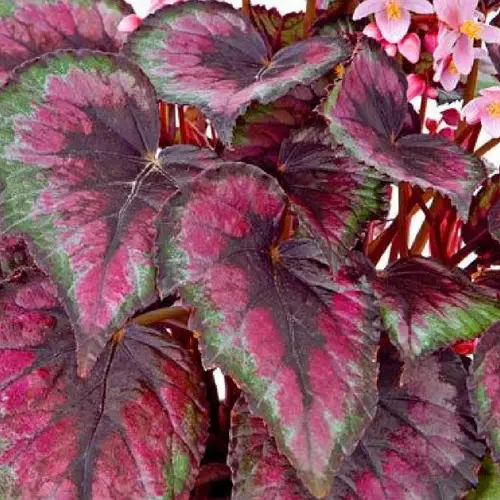
Key Characteristics: Begonias are prized for their attractive, colorful foliage featuring asymmetrical, off-center heart-shaped leaves. Depending on the variety, leaves may also be star-shaped, oval, or spear-like. The foliage displays stunning patterns in silver, pink, red, purple, and green combinations, often with metallic or iridescent finishes.
Pet Safety: Begonias are toxic to pets. They contain soluble calcium oxalates that can cause oral irritation, excessive drooling, vomiting, and difficulty swallowing in cats and dogs. Keep these plants out of reach of pets and children.
Popular Begonia Varieties for Malaysian Homes
Each begonia variety offers unique leaf shapes, colors, and growth patterns suited to different indoor settings:
- Begonia rex (Rex Begonia): The most popular foliage variety with spectacular leaf patterns in metallic silver, purple, pink, and green
- Begonia rex ‘Her Majesty’: Features large leaves with silver centers and dark margins
- Begonia rex ‘Merry Christmas’: Displays bright red centers with green edges
- Begonia rex ‘Silver Queen’: Showcases predominantly silver foliage with dark veining
- Begonia rex ‘Yuletide’: Offers deep burgundy leaves with pink highlights
- Begonia masoniana (Iron Cross Begonia): Named for the distinctive dark cross pattern on pebbled green leaves
- Begonia maculata (Polka Dot Begonia): Features olive-green leaves with silver spots and red undersides
- Begonia boweri (Eyelash Begonia): Small variety with tiny hairs along leaf edges resembling eyelashes
- Begonia cleopatra (Mapleleaf Begonia): Compact plant with maple-shaped leaves in bronze and green
- Begonia metallica (Metallic Leaf Begonia): Displays metallic bronze-green leaves with prominent red veining
- Begonia feastii (Begonia erythrophylla): Round, glossy leaves that are green above and red beneath
- Begonia imperialis (Carpet Begonia): Low-growing variety with velvety, textured foliage
- Begonia foliosa: Delicate variety with small, fern-like leaves on arching stems
- Begonia solanthera: Features glossy, lance-shaped leaves with attractive veining
- Begonia tiger: Striped foliage resembling tiger markings
Essential Care Requirements for Malaysian Climate
Malaysia’s tropical environment (24-32°C with 70-90% humidity) provides excellent baseline conditions for begonias, but indoor cultivation requires attention to specific needs:
Temperature
Begonias thrive in average warmth between 18-24°C, which aligns well with air-conditioned Malaysian homes. Avoid placing plants near cold air-conditioning vents or in rooms that experience temperature fluctuations. They can tolerate slightly warmer conditions (up to 27°C) if humidity is maintained.
Light Requirements
Position your begonia in a bright spot with indirect light, away from direct sunlight. Malaysia’s intense tropical sun can scorch delicate begonia leaves, causing brown patches and fading colors. East or north-facing windows provide ideal lighting conditions. In darker rooms, leaves may lose their vibrant patterns and the plant may become leggy.
Watering Guidelines
Proper watering is crucial for begonia health in Malaysia’s climate:
- Keep the growing medium consistently moist but never waterlogged
- Allow the top 2-3cm of soil to dry between waterings
- In humid conditions, check soil moisture before watering to prevent overwatering
- Water at the base of the plant; avoid wetting leaves, especially on Rex varieties
- Reduce watering frequency slightly during monsoon season when humidity is highest
- Use room-temperature water to avoid shocking roots
Humidity Management
While Malaysia’s natural humidity (70-90%) is ideal, air-conditioned rooms can drop below the 60-70% humidity begonias prefer. Increase humidity by:
- Placing pots on trays filled with pebbles and water (ensure pot base sits above water level)
- Grouping plants together to create a microclimate
- Using a room humidifier in heavily air-conditioned spaces
- Avoiding direct misting on Rex begonia leaves, which can cause spotting
Potting Medium and Repotting
Begonias require well-draining, nutrient-rich growing medium. Repot annually in spring using fresh potting mix to:
- Refresh depleted nutrients
- Prevent compaction and improve drainage
- Inspect roots for health issues
- Provide room for growth
Recommended Growing Media:
- Serbajadi Organic Peat Moss – Excellent moisture retention with good drainage
- Serbajadi Multi-Purpose Compost – Nutrient-rich option for healthy growth
Choose pots with drainage holes and avoid oversized containers, which retain excess moisture and increase root rot risk.
Fertilizing Schedule
Regular feeding maintains vibrant foliage colors and promotes healthy growth. Choose fertilizer based on your begonia type:
For Foliage Varieties (Rex, Masoniana, etc.):
Use Serbajadi Plant Food Organic Plus 23 Growing Fertilisers (750gm) every 2-3 weeks during active growth. This high-nitrogen formula promotes lush, colorful leaves and strong stems.
For Flowering Varieties:
Apply Serbajadi Plant Food Organic Plus 41 Flowering Fertilisers (750gm) to encourage blooms while maintaining healthy foliage.
Reduce fertilizing frequency during slower growth periods or if your plant shows signs of stress.
Common Problems and Solutions
Recognizing and addressing issues early prevents serious damage to your begonias:
Leaf and Foliage Issues
Brown Blotches Turning Grey and Mouldy:
Cause: Overly moist soil combined with insufficient light creates conditions for fungal growth.
Solution: Reduce watering frequency, improve drainage, and move plant to a brighter location. Remove affected leaves and ensure good air circulation.
Brown Leaf Tips:
Cause: Low humidity, especially in air-conditioned rooms.
Solution: Increase ambient humidity using pebble trays or grouping plants. Trim brown tips with clean scissors.
Pale, Rotting Leaves:
Cause: Overwatering leading to root suffocation and rot.
Solution: Allow soil to dry more between waterings. Check drainage holes aren’t blocked. Consider repotting in fresh, well-draining medium if roots show rot.
Yellowing Leaves:
Cause: Watering inconsistencies (too much or too little) or insufficient light.
Solution: Establish consistent watering schedule based on soil moisture. Move to brighter location if light is inadequate. Yellow leaves may also indicate nitrogen deficiency—apply appropriate fertilizer.
Leaf Loss:
Cause: Multiple factors including insufficient light, excessive heat, or watering problems.
Solution: Assess growing conditions systematically. Ensure plant receives bright, indirect light, maintain temperatures between 18-24°C, and water when top soil layer dries.
Flowering Issues
Flower Buds Drop Before Opening:
Cause: Low humidity or underwatering during bud development.
Solution: Maintain consistent moisture levels and increase humidity around flowering plants. Avoid moving plants once buds form.
Severe Problems
Plant Collapse:
Cause: Root system failure due to rot, disease, or severe pest infestation.
Solution: Unpot plant and inspect roots. Remove all rotted sections with sterile tools. If healthy roots remain, repot in fresh medium. Severely damaged plants may require propagation from healthy stem or leaf cuttings.
Pest Management
While begonias are relatively pest-resistant, Malaysian indoor conditions can occasionally attract common houseplant pests:
Spider Mites
Identification: Tiny spider-like pests creating fine webbing on leaf undersides. Leaves develop yellow stippling and may become bronzed.
Treatment:
- Wipe leaves with damp cloth or cotton bud to remove mites and webbing
- Spray thoroughly with Serbajadi Neem Spray Extra Strength
- Repeat treatment weekly for three weeks to break reproduction cycle
Prevention: Spider mites attack water-stressed plants. Maintain consistent watering (without overwatering) and adequate humidity to prevent infestations.
Aphids
Identification: Small, soft-bodied insects (green, black, or brown) clustering on new growth and leaf undersides. Leaves may curl or become distorted.
Treatment:
- Spray plant with high-pressure water to dislodge aphids
- Follow with application of Serbajadi Neem Spray Extra Strength
- Inspect plant weekly and repeat treatment if aphids return
For more detailed information on aphid identification and control, see our comprehensive aphid guide.
Mealybugs
Identification: White, cottony masses in leaf axils and on stems.
Treatment:
- Remove visible mealybugs with cotton swabs dipped in rubbing alcohol
- Spray entire plant with GarNeem Spray
- Isolate affected plants to prevent spread to other houseplants
Propagation Tips
Begonias propagate readily, allowing you to expand your collection or share plants with friends:
Leaf Cuttings (Rex Begonias):
- Select healthy, mature leaf and cut into sections, each containing a main vein
- Place cut sections on moist propagation medium
- Cover with clear plastic to maintain humidity
- New plantlets emerge from veins in 4-6 weeks
Stem Cuttings (Cane-type Begonias):
- Take 10-15cm stem cuttings with 2-3 leaf nodes
- Remove lower leaves and insert cutting into moist medium
- Keep warm and humid until roots develop (3-4 weeks)
Use Rooting Powder to encourage faster root development on cuttings.
Seasonal Care Adjustments
While Malaysia lacks distinct seasons, monsoon periods and dry spells require care modifications:
During Monsoon Season (November-March):
- Reduce watering frequency as humidity increases
- Ensure excellent drainage to prevent waterlogging
- Watch for fungal issues in high humidity
- Maintain good air circulation around plants
During Dry Periods:
- Monitor soil moisture more frequently
- Increase humidity measures if using air conditioning
- Watch for spider mite activity, which increases in dry conditions
Frequently Asked Questions
Are begonias safe for pets?
No, begonias are toxic to cats and dogs. They contain soluble calcium oxalates that can cause oral irritation, excessive drooling, vomiting, and difficulty swallowing if ingested. Keep begonias out of reach of pets and children.
Why are my begonia leaves turning yellow?
Yellow leaves on begonias typically indicate watering issues (overwatering or underwatering) or insufficient light. In Malaysia’s climate, ensure proper drainage and check that your plant receives bright, indirect light. Yellow leaves can also signal nitrogen deficiency if the plant hasn’t been fertilized regularly.
How often should I water begonias in Malaysia?
In Malaysia’s humid tropical climate (24-32°C with 70-90% humidity), water begonias when the top 2-3cm of soil feels dry to touch. This typically means watering 2-3 times per week, but frequency depends on your indoor conditions, pot size, and whether you use air conditioning. Always check soil moisture before watering to prevent root rot.
What’s the best fertilizer for foliage begonias?
For foliage begonias like Rex varieties, use a high-nitrogen fertilizer such as Serbajadi Plant Food Organic Plus 23 Growing Fertilisers to promote lush, colorful leaves. Apply every 2-3 weeks during the growing season. For flowering begonia varieties, switch to Serbajadi Plant Food Organic Plus 41 Flowering Fertilisers to encourage blooms.
Can begonias survive in air-conditioned rooms?
Yes, begonias can adapt to air-conditioned environments, but you’ll need to increase humidity levels. Air conditioning reduces humidity below the 60-70% that begonias prefer. Use a pebble tray filled with water, group plants together, or mist leaves occasionally (avoiding water on Rex begonia leaves). Watch for brown leaf tips, which indicate low humidity.
Conclusion
Growing begonias successfully in Malaysian homes combines understanding their basic needs with adapting care to our tropical climate. These stunning foliage plants reward attentive care with spectacular leaf displays that brighten indoor spaces year-round. By providing bright indirect light, consistent moisture, adequate humidity, and regular feeding with quality products like Serbajadi fertilizers, you’ll enjoy healthy, vibrant begonias that showcase the best of indoor tropical gardening.
Whether you’re starting with a classic Rex begonia or exploring unique varieties like the Iron Cross or Polka Dot begonia, the principles in this guide will help you create the ideal environment for these beautiful plants to thrive in your Malaysian home.