How to Grow Sedum Succulents in Malaysia’s Tropical Climate
Sedum succulents are beloved for their fleshy, water-storing leaves and low-maintenance nature, making them perfect for busy Malaysian gardeners. While these drought-tolerant plants originate from drier climates, they can thrive in Malaysia’s tropical environment (24-32°C with humidity above 80%) when given proper care. This comprehensive guide will help you successfully grow beautiful, healthy sedum plants in your Malaysian home or garden.
Understanding Sedum Succulents
Classification: Foliage houseplant
Plant Group: Bushy and upright succulents
Characteristics: Fleshy leaves that are either cylindrical or boat-shaped, storing water for drought tolerance
Pet Safety: Mildly toxic to cats and dogs – may cause vomiting or digestive upset if ingested. Keep out of reach of pets.
Popular Sedum Varieties for Malaysian Gardens
These sedum varieties adapt well to tropical conditions when provided with adequate light and proper drainage:
- Sedum adolphii (Golden Sedum) – Features golden-yellow leaves that intensify in bright light
- Sedum allantoides – Compact variety with powdery blue-green leaves
- Sedum bellum – Forms attractive rosettes with pale green foliage
- Sedum morganianum (Donkey’s Tail) – Trailing variety perfect for hanging baskets
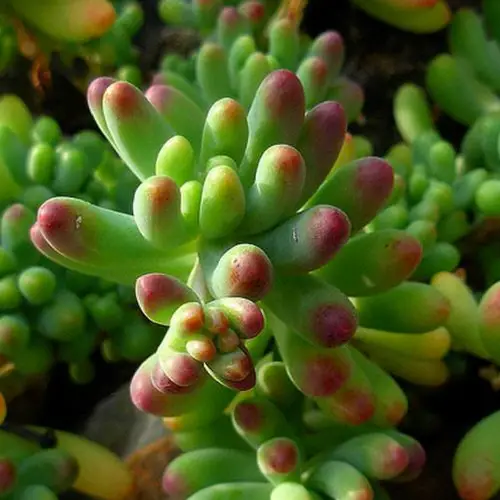
- Sedum pachyphyllum (Jelly Beans) – Plump, finger-like leaves with red tips
- Sedum prealtum – Upright growth with glossy green leaves
- Sedum rubrotinctum (Christmas Cheer) – Bean-shaped leaves that turn red in bright light
- Sedum sieboldii mediovariegatum – Variegated variety with cream and green leaves
Essential Care Guide for Sedum in Malaysia
Temperature Requirements
Sedum thrives in Malaysia’s average warmth (24-32°C). They can tolerate our hot afternoons but appreciate good air circulation to prevent fungal issues in high humidity. Avoid placing them in areas with temperature fluctuations from air conditioning.
Light Requirements
Provide semi-shade with some direct sunlight for optimal growth. In Malaysia’s intense tropical sun, morning sunlight (6-10 AM) is ideal, followed by bright indirect light or filtered afternoon shade. Too little light causes etiolation (leggy growth), while excessive direct sun can cause sunburn and brown, calloused patches on leaves.
Watering Guidelines
This is critical in Malaysia’s humid climate. Water thoroughly only when the potting medium begins to dry out – typically every 7-14 days depending on pot size and location. During monsoon season, reduce watering frequency as ambient humidity increases. Always check soil moisture before watering to prevent root rot.
Soil and Potting
Use well-draining soil specifically formulated for cacti and succulents. We recommend Serbajadi Cactus Soil, which provides excellent drainage essential for preventing root rot in tropical humidity. For general repotting, Serbajadi Multipurpose Potting Mixture or Serbajadi Potting Soil work well when mixed with perlite for added drainage.
Repot only when necessary – typically every 2-3 years or when the plant becomes root-bound.
Fertilizing
Feed your sedum during the growing season with specialized fertilizer. For optimal growth, use Serbajadi Cactus & Succulent Growth Booster to promote healthy foliage and strong root development. If you want to encourage flowering in flowering varieties, switch to Serbajadi Cactus & Succulent Flower Booster.
Troubleshooting Common Sedum Problems
Leaf and Growth Issues
Discoloration or pale leaves: Insufficient light. Move to a brighter location with more indirect sunlight.
Leggy, elongated growth: Not enough light causes etiolation. Increase light exposure gradually to prevent shock.
Brown, calloused patches: Sunburn from excessive direct sun. Provide afternoon shade or move to a location with filtered light.
Shriveled or puckered leaves: Underwatering. Water thoroughly and establish a more consistent watering schedule.
Dry, brown, crispy leaves: Severe underwatering or very low humidity (rare in Malaysia). Increase watering frequency slightly.
Mushy leaves that fall apart: Overwatering – the most common problem in Malaysia’s humid climate. Reduce watering immediately and check for root rot.
Root and Stem Problems
Root rot: Caused by drainage issues and/or overwatering. Remove affected roots, repot in fresh Serbajadi Cactus Soil, and reduce watering frequency.
Browning or blackening leaves/stems: Advanced overwatering damage. Cut away affected parts with sterile tools and improve drainage.
Blackening at plant base: Severe root rot. May require propagation from healthy cuttings if the main plant cannot be saved.
Pest Management for Sedum
Malaysia’s warm, humid climate can encourage pest infestations. Regular inspection is key to early detection.
Common Pests and Solutions
Mealybugs: White, cottony insects that cluster in leaf joints. Wipe off with a damp cloth or cotton bud dipped in rubbing alcohol, then spray with Serbajadi Extra Strength Neem Spray for thorough treatment.
Spider mites: Tiny pests that create fine webbing and cause stippled leaves. These attack water-stressed plants, so maintain proper watering (without overwatering). Remove with a damp cloth and treat with Serbajadi Extra Strength Neem Spray.
Scale insects: Brown, shell-like bumps on stems and leaves. Scrape off gently with a cotton bud, then spray affected areas with Serbajadi Extra Strength Neem Spray to prevent re-infestation.
Important: Always isolate infected plants to prevent pests from spreading to your other succulents and houseplants.
Tips for Success in Malaysia’s Climate
- Monsoon season care: Reduce watering during heavy rain periods as ambient humidity increases dramatically
- Air circulation: Ensure good airflow around plants to prevent fungal issues in high humidity
- Pot selection: Use terracotta or unglazed ceramic pots that allow soil to dry faster than plastic
- Drainage holes: Always ensure pots have adequate drainage – this is non-negotiable for succulents
- Indoor vs outdoor: Indoor sedum need brighter locations near windows; outdoor plants need protection from heavy rain
- Seasonal adjustments: During hot, dry spells (rare in Malaysia), you may need to water slightly more frequently
Frequently Asked Questions
Are sedum succulents safe for pets?
Most sedum varieties are considered mildly toxic to cats and dogs if ingested. They may cause vomiting, diarrhea, or stomach upset. Keep sedum plants out of reach of curious pets, or choose pet-safe succulents like Haworthia or Echeveria instead.
How often should I water sedum in Malaysia’s humid climate?
In Malaysia’s high humidity (above 80%), water sedum only when the top 2-3 cm of soil feels completely dry. This typically means watering every 7-14 days, depending on pot size and location. During monsoon season, reduce watering frequency as humidity levels increase.
Why is my sedum growing tall and leggy?
Leggy growth (etiolation) indicates insufficient light. Move your sedum to a brighter location with more indirect sunlight. In Malaysia’s tropical climate, morning sun with afternoon shade works best to prevent both etiolation and sunburn.
What causes brown, mushy leaves on sedum?
Mushy, brown leaves that fall apart easily indicate overwatering or root rot. This is common in Malaysia’s humid climate. Reduce watering immediately, ensure your pot has drainage holes, and consider repotting in fresh, well-draining cactus soil.
Which sedum varieties grow best in Malaysia?
Heat-tolerant varieties like Sedum adolphii (Golden Sedum), Sedum rubrotinctum (Jelly Beans), and Sedum morganianum (Donkey’s Tail) perform well in Malaysia’s tropical climate. These varieties can handle temperatures between 24-32°C and adapt better to high humidity conditions.
Conclusion
Growing sedum succulents in Malaysia requires understanding the unique challenges of our tropical climate – primarily managing moisture in high humidity while providing adequate light. With proper care, well-draining soil, and vigilant pest monitoring, these beautiful succulents will reward you with stunning foliage and minimal maintenance requirements. Whether you’re a beginner or experienced gardener, sedum makes an excellent addition to any Malaysian plant collection.
For all your sedum care needs, explore our range of specialized cactus and succulent products designed for tropical growing conditions.