

Orchid care becomes easier when you know which type you are growing. Light, growing media and watering needs vary between groups. These six tips help you observe your plant and build a routine around its roots and growing conditions.
1. Choose the Right Potting Media for Orchid Roots
Unlike regular houseplants, orchids are epiphytes in nature – they grow on tree bark, not in soil. Their roots need excellent air circulation and fast drainage to stay healthy in Malaysia’s humid climate.
Bark-Based Potting Mix: This is the most popular choice for Malaysian orchid growers. Bark chunks drain water quickly, preventing root rot even during monsoon season. Ideal if you water frequently or grow orchids outdoors where they’re exposed to rain. Water retention is lower, so you’ll need to water every 3-5 days during hot weather.
Moss-Based Potting Mix: Sphagnum moss retains moisture much longer than bark – perfect if you travel often, tend to forget watering, or grow orchids in air-conditioned rooms where humidity is lower. However, be careful not to overwater, as moss stays wet longer and can lead to root suffocation in our humid climate.
Critical Pot Requirements: Always use pots with multiple drainage holes at the bottom and sides. Clear plastic pots are excellent for beginners as they let you monitor root health – healthy orchid roots are silvery-green when dry and bright green when wet. Repot every 1-2 years or when the potting media breaks down and becomes compacted.

2. Maintain Optimal Humidity and Air Circulation
Malaysia’s natural humidity (70-90%) is actually suited to orchids, but indoor air-conditioning can drop humidity to uncomfortable levels for these tropical plants. Aim for 50-70% humidity around your orchids.
Increasing Humidity Indoors: Place orchid pots on humidity trays filled with pebbles and water (ensure the pot sits above water level, not in it). Group several orchids together to create a micro-humid environment. Run a small humidifier nearby if your air-conditioning runs constantly.
Air Circulation is Critical: While orchids love humidity, stagnant air in Malaysia’s climate invites fungal diseases, bacterial rot, and pest infestations. Use a small oscillating fan on low speed to keep air moving gently around your plants, especially at night when temperatures drop and humidity spikes. For outdoor orchids, natural breezes usually provide adequate air movement.
Temperature Considerations: Most orchids thrive in Malaysia’s consistent 24-28°C range. Avoid placing orchids near air-conditioning vents (too cold and dry) or in enclosed spaces without ventilation (too humid and stagnant).
3. Provide Bright Indirect Light (Not Direct Sun)
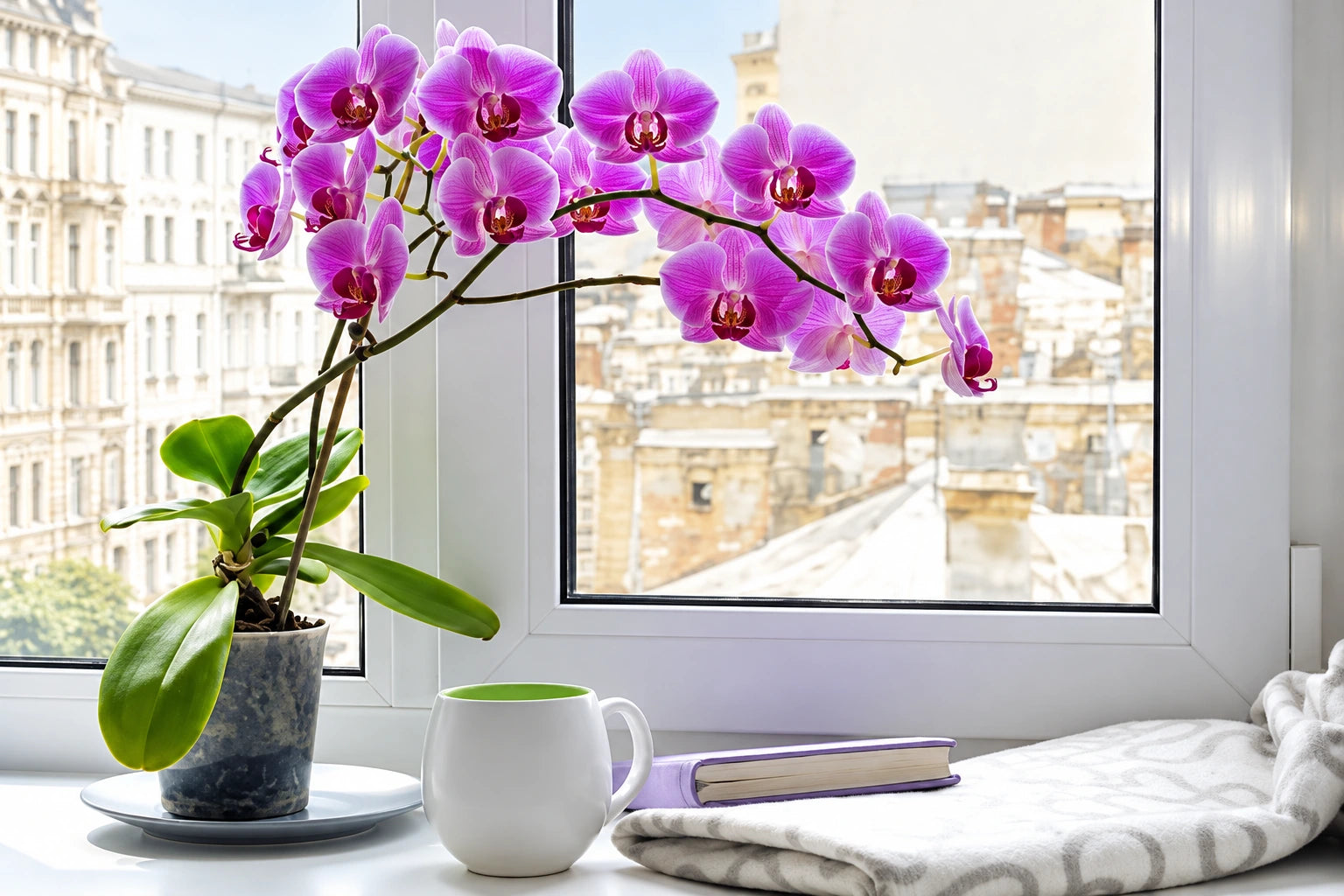
Malaysia’s tropical sun is intense, especially between 11am-3pm when UV levels peak. Direct sunlight will quickly scorch orchid leaves, causing brown or yellow burn marks that never recover.
Indoor Light Placement: Position orchids near east-facing windows (gentle morning sun) or west-facing windows with sheer curtains. North-facing windows work but may not provide enough light for flowering. South-facing windows receive the harshest afternoon sun – use double-layer curtains or move plants 1-2 meters back from the glass.
Outdoor Light Management: Grow orchids under trees with dappled shade, beneath pergolas, or under 50-70% shade cloth. Dendrobium orchids tolerate slightly more light than Phalaenopsis. Watch for signs: dark green leaves indicate too little light (orchid won’t bloom), while reddish or pale yellow leaves signal too much light exposure.
Light Duration: Orchids need 10-12 hours of bright indirect light daily to bloom well. Supplement with grow lights if your home lacks adequate natural light, especially during monsoon season when skies are overcast for days.
4. Water Correctly – Avoid Overwatering

Overwatering is the number one killer of orchids, especially in Malaysia’s already-humid environment. Root rot develops quickly when roots sit in waterlogged media.
The Finger Test: Before watering, insert your finger 2-3cm deep into the potting media. If you feel any moisture, wait another day or two. Only water when the media feels nearly dry. For bark-based mixes, this is typically every 3-5 days in hot weather, 5-7 days in air-conditioned rooms. Moss-based mixes need watering every 7-10 days.
Proper Watering Technique: Water thoroughly in the morning, allowing water to flow freely through drainage holes. Never let pots sit in water-filled saucers. In Malaysia’s climate, morning watering allows excess moisture to evaporate during the day, reducing fungal disease risk.
Monsoon Season Adjustments: During heavy rain periods, reduce watering frequency significantly for outdoor orchids. Move potted orchids under shelter to prevent waterlogging. Indoor orchids may need less frequent watering as ambient humidity increases.
Water Quality: Use room-temperature water. Rainwater is ideal (free and naturally soft). If using tap water, let it sit overnight to allow chlorine to dissipate, as chlorine can damage beneficial root fungi.
5. Fertilise for Healthy Growth and Abundant Blooms
Orchids are light feeders compared to other plants, but regular fertilisation is important for vigorous growth and spectacular flowering in our tropical climate.
Growth Phase Fertilisation: When your orchid is producing new leaves and roots (typically after blooming ends), use Serbajadi Orchid Growth Booster every 2 weeks. This specialised formula promotes strong root development and healthy foliage, preparing the plant for its next blooming cycle.
Flowering Phase Fertilisation: When you notice a flower spike emerging, switch to Serbajadi Orchid Flower Booster. This high-phosphorus formula encourages more flower buds, larger blooms, and longer-lasting flowers. Continue through the entire blooming period.
Foliar Feeding Options: For quick nutrient uptake, try Serbajadi Orchid Spray 1 during growing phases or Orchid Spray 2 when flowering. Spray early morning on leaf surfaces (avoid flowers) for best absorption.
Fertilising Schedule: Apply fertiliser every 2 weeks during active growth (hot, sunny months). Reduce to once monthly during cooler monsoon periods when growth naturally slows. Always water before fertilising to prevent root burn.

Serbajadi Orchid Flower Booster & Serbajadi Orchid Growth Booster
6. Repot After Flowering with Fresh Media

In Malaysia’s warm, humid climate, orchid potting media breaks down faster than in temperate regions. Bark decomposes, moss compacts, and drainage deteriorates – usually within 1-2 years.
When to Repot: The best time is right after flowering ends, when the orchid enters its growth phase. Signs your orchid needs repotting include: potting media that looks decomposed or smells musty, roots growing extensively outside the pot, water draining very slowly, or if it’s been 2+ years since the last repot.
Repotting Process: Gently remove the orchid from its pot and rinse roots under lukewarm water. Trim any dead (brown, mushy) roots with sterilized scissors. Select a pot only slightly larger than the root mass – orchids prefer being slightly pot-bound. Fill with fresh bark or moss-based media, positioning the plant at the same depth as before.
Post-Repotting Care: Wait 3-5 days before watering to allow any damaged roots to heal. Place in bright indirect light and avoid fertilising for 2-3 weeks. Resume normal care once you see new root growth (green root tips).
Pruning Flower Spikes: After blooms fade, you can cut the spike just above a node (small bump on the stem) – sometimes a secondary spike will emerge. Or cut at the base if you want the plant to focus energy on new growth rather than reblooming.
Common Orchid Problems in Malaysia
Yellow Leaves: Usually indicates overwatering or root rot. Check roots – healthy ones are firm and green/white, rotted roots are brown and mushy. Reduce watering frequency and improve drainage.
No Flowers: Insufficient light is the most common cause. Move to a brighter location. Also ensure you’re using flower booster fertiliser and that the orchid has experienced a slight temperature drop (even 2-3°C difference between day and night can trigger blooming).
Black Spots on Leaves: Fungal or bacterial infection, common in stagnant humid conditions. Improve air circulation, avoid getting leaves wet when watering, and remove affected leaves. Apply fungicide if spreading.
Wrinkled Leaves: Underwatering or damaged roots that can’t absorb water. Check root health and adjust watering schedule.
Pests (Mealybugs, Scale, Spider Mites): Inspect regularly, especially leaf undersides and where leaves meet stems. Treat with GarNeem Spray for organic pest control suitable for indoor use.
Frequently Asked Questions About Orchid Care in Malaysia
How often should I water orchids in Malaysia?
In Malaysia’s tropical climate, water orchids every 5-7 days for indoor plants in air-conditioning, or every 3-4 days for outdoor orchids during hot weather. Always check that the potting media is nearly dry before watering. Insert your finger 2-3cm deep – if you feel moisture, wait another day or two.
What is the best potting mix for orchids in tropical climates?
Bark-based potting mix is ideal for most Malaysian orchid growers as it drains quickly and prevents root rot in our humid climate. Moss-based mix works well if you travel frequently or tend to underwater, as it retains moisture longer. Never use regular potting soil – orchids need excellent drainage and air circulation around their roots.
Can orchids grow in direct sunlight in Malaysia?
No, direct sunlight in Malaysia’s intense tropical heat (often exceeding 32°C)


