How to Start Growing from Seeds in Malaysia
Growing from seeds in Malaysia’s tropical climate is one of the most rewarding ways to start your gardening journey. Whether you’re looking to grow your own vegetables to combat rising food prices or simply want to experience the joy of nurturing plants from their very beginning, seed starting offers incredible satisfaction. With Malaysia’s warm temperatures (24-32°C) and high humidity, you have ideal conditions for many tropical plants—but success requires understanding how to work with our unique climate.
This comprehensive guide will walk you through everything you need to know about starting seeds successfully in Malaysia, from choosing the right varieties to caring for your seedlings until they’re ready for the garden.
Why Start Growing from Seeds?
Starting plants from seeds offers several advantages for Malaysian home gardeners:
- Cost-effective: Seeds are significantly cheaper than buying established plants, making it budget-friendly to grow your own food
- Greater variety: Access to vegetable and flower varieties not commonly available as seedlings in local nurseries
- Food security: Grow your own fresh vegetables and reduce dependence on market prices
- Educational: Perfect activity for children to learn about plant life cycles and nature
- Satisfaction: Experience the complete journey from seed to harvest
Step 1: Choose the Right Seeds for Malaysia’s Tropical Climate
Not all seeds perform equally in tropical conditions. Malaysia’s consistent warmth and high humidity favor certain plants while challenging others. When selecting seeds, prioritize heat-tolerant varieties that can handle our climate.
Best Seeds for Malaysian Gardens
Vegetables that thrive in tropical heat:
- Kangkung (water spinach) – germinates quickly in warm conditions
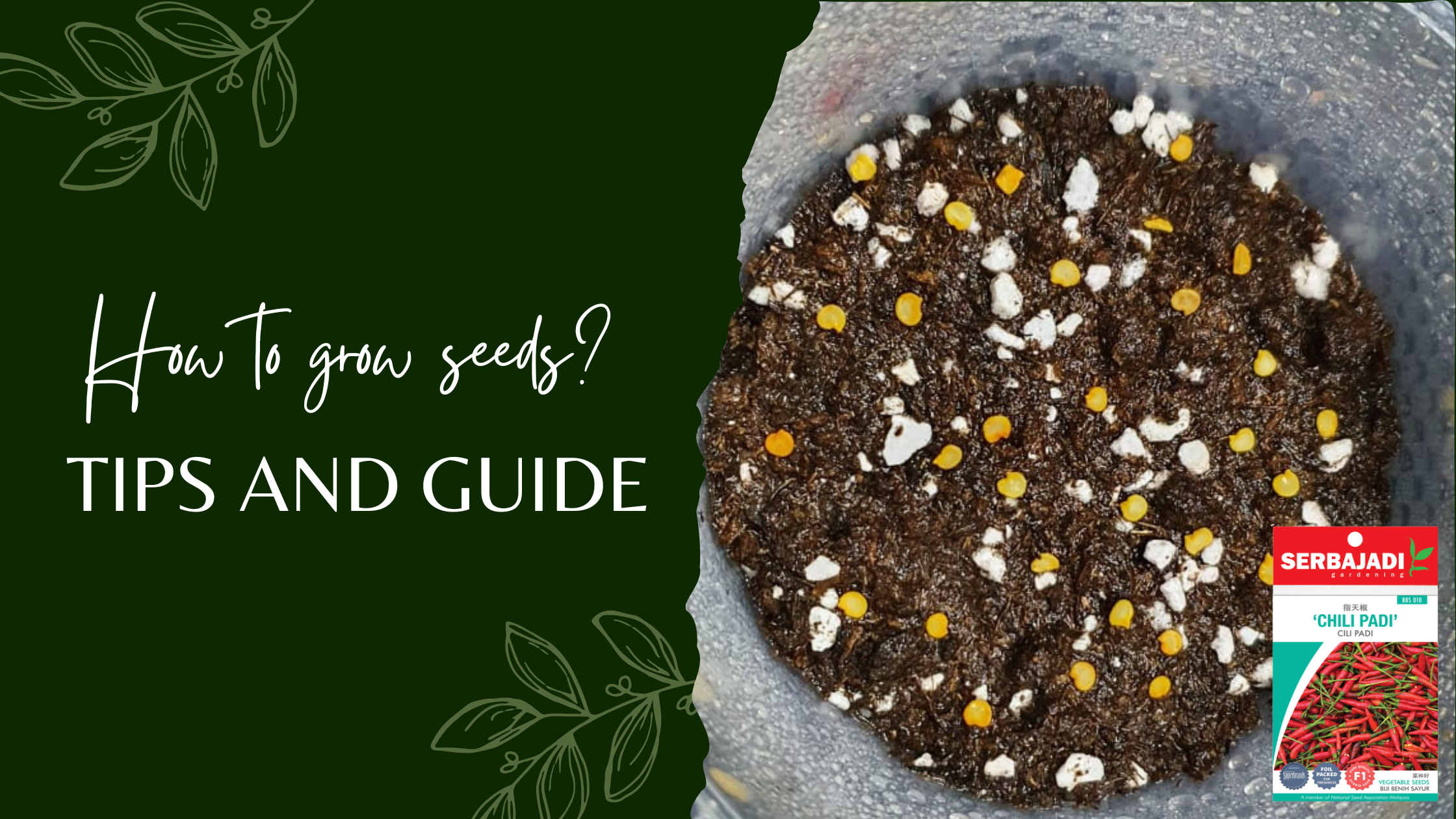
- Chili peppers – loves heat and humidity
- Tomatoes – choose heat-tolerant varieties
- Okra (lady’s finger) – extremely heat-tolerant
- Long beans – perfect for tropical gardens
- Eggplant – thrives in warm weather
- Local leafy greens (bayam, sawi, cekur manis)
Browse Serbajadi’s vegetable seed collection for varieties specifically selected for Malaysian growing conditions.
Climate Considerations
When choosing seeds, consider Malaysia’s climate challenges:
- High temperatures: Select heat-tolerant varieties that can handle 30-35°C
- Heavy monsoon rains: Choose disease-resistant varieties less prone to fungal issues
- High humidity: Avoid plants prone to powdery mildew and damping-off
- Intense sunlight: Some seedlings may need shade protection during establishment
Step 2: Use the Right Seed Starting Medium
The growing medium you choose significantly impacts germination success. In Malaysia’s humid climate, using the correct soil mix prevents common problems like damping-off disease and poor drainage.
Recommended Seed Starting Mix
For optimal results in tropical conditions, use Serbajadi Organic Seed Starter. This sterile, well-draining medium is specifically formulated to:
- Prevent damping-off disease common in high-humidity environments
- Provide excellent drainage while retaining adequate moisture
- Offer the light, fluffy texture that allows delicate roots to develop easily
- Remain free from weed seeds and pathogens
Improving Moisture Retention
During particularly hot periods, enhance your seed starting mix by adding Coco Peat. This natural coconut fiber:
- Retains moisture without becoming waterlogged
- Improves aeration for healthy root development
- Helps buffer against temperature fluctuations
- Is sustainable and environmentally friendly
Important: Never use regular garden soil for starting seeds. It’s too heavy, may contain diseases, and doesn’t provide the drainage needed for successful germination.
Step 3: Boost Germination Success
Malaysia’s climate can be challenging for seed germination. High temperatures and humidity create perfect conditions for fungal diseases, while intense heat can reduce germination rates for some varieties.
Use a Seed Booster
Improve your germination success rate with Organic Seed Booster. This specialized product:
- Enhances germination rates, especially for difficult-to-sprout seeds
- Strengthens seedling vigor from the start
- Improves resistance to damping-off disease
- Promotes faster, more uniform germination
Germination Tips for Tropical Conditions
- Timing: Start seeds in the early morning or late afternoon when temperatures are cooler
- Location: Place seed trays in a spot with bright, indirect light—avoid direct afternoon sun that can overheat trays
- Air circulation: Ensure good airflow to prevent fungal issues, but avoid strong winds that dry out trays
- Temperature: Most tropical vegetables germinate best at 25-30°C; if temperatures exceed 32°C, provide shade
Step 4: Master Watering in Malaysia’s Climate
Proper watering is critical for seed germination success. In Malaysia’s heat, the balance between keeping seeds moist and avoiding waterlogging requires attention.
Watering Guidelines
- Frequency: Check seed trays twice daily during hot weather; the growing medium should remain consistently moist but never soggy
- Method: Use a fine spray bottle or mister to water gently without disturbing seeds
- Timing: Water in early morning or late afternoon to minimize evaporation
- Drainage: Ensure containers have drainage holes to prevent waterlogging
- Monsoon season: Protect seed trays from heavy rain which can wash away seeds or cause fungal problems
Signs of Watering Problems
- Too dry: Growing medium pulls away from container edges, seeds fail to germinate
- Too wet: Algae growth on soil surface, seedlings collapse at soil line (damping-off), musty smell
Step 5: Care for Emerging Seedlings
Once your seeds germinate and seedlings emerge, they need proper care to develop into strong, healthy plants ready for transplanting.
Light Requirements
Seedlings need bright light but protection from Malaysia’s intense afternoon sun:
- Provide 4-6 hours of morning sunlight
- Use shade cloth (30-50%) during midday heat
- Rotate trays regularly for even growth
- Watch for leggy, stretched seedlings—a sign of insufficient light
Fertilizing Seedlings
Begin feeding once seedlings develop their first true leaves (the second set of leaves that appear after the initial seed leaves):
For vegetable seedlings, use Organic Vegetable Fertiliser at half the recommended strength. This gentle feeding:
- Promotes healthy leaf and root development
- Strengthens seedlings before transplanting
- Provides balanced nutrition for vegetable crops
Critical Safety Note: For all edible crops, observe a strict 7-day withholding period between fertilizer application and harvest. This safety protocol applies to both organic and inorganic fertilizers. Always wash harvested produce thoroughly before consumption.
Pest and Disease Prevention
Young seedlings are vulnerable to pests and diseases in Malaysia’s humid climate:
- Damping-off: Prevent by using sterile growing medium, avoiding overwatering, and ensuring good air circulation
- Aphids: Check undersides of leaves regularly; treat early infestations with GarNeem Spray
- Fungal issues: Water at soil level rather than overhead; avoid evening watering
Step 6: Transplanting Seedlings
When seedlings develop 2-4 true leaves and are 5-8cm tall, they’re ready for transplanting into larger containers or garden beds.
Hardening Off
Before transplanting outdoors, gradually acclimate seedlings to outdoor conditions over 5-7 days:
- Day 1-2: Place outdoors in full shade for 2-3 hours
- Day 3-4: Increase to 4-5 hours with morning sun exposure
- Day 5-6: Full day outdoors with shade during peak afternoon heat
- Day 7: Ready for transplanting
Transplanting Process
- Water seedlings thoroughly 1-2 hours before transplanting
- Prepare containers or garden beds with quality Potting Soil
- Gently remove seedlings, keeping root ball intact
- Plant at the same depth as in seed tray (except tomatoes, which can be planted deeper)
- Water gently but thoroughly after transplanting
- Provide shade for 2-3 days while plants adjust
Common Seed Starting Mistakes to Avoid
- Planting too deep: Most seeds need light to germinate; plant at depth equal to 2-3 times seed diameter
- Using old seeds: Germination rates decline with age; use fresh seeds for best results
- Overcrowding: Give each seed adequate space; thin seedlings if necessary
- Inconsistent moisture: Allowing growing medium to dry out completely can kill germinating seeds
- Starting too early: Plan seed starting based on your planting schedule
- Skipping labels: Always label seed trays—it’s easy to forget what you planted where
Essential Supplies for Seed Starting Success
Set yourself up for success with these essential supplies:
- Organic Seed Starter – sterile growing medium
- Organic Seed Booster – improve germination rates
- Coco Peat – enhance moisture retention
- Potting Soil – for transplanting
- Organic Vegetable Fertiliser – for feeding seedlings
- Seed trays or small containers with drainage holes
- Spray bottle for gentle watering
- Plant labels and waterproof marker
For beginners, consider the Vegetable Growing Kit which includes essential supplies to get started.
Frequently Asked Questions
What seeds grow best in Malaysia’s tropical climate?
Heat-tolerant vegetables thrive in Malaysia’s climate (24-32°C with high humidity). Excellent choices include kangkung (water spinach), chili peppers, tomatoes, okra, long beans, eggplant, and local leafy greens like bayam and sawi. These varieties are adapted to tropical conditions and can handle Malaysia’s intense sun and monsoon rains.
How often should I water seeds in Malaysia’s hot climate?
In Malaysia’s heat, check seed trays twice daily. Keep the growing medium consistently moist but never waterlogged. Use a spray bottle for gentle watering to avoid disturbing seeds. During hot periods (above 30°C), you may need to mist more frequently. Once seedlings emerge, water when the top layer feels dry to touch.
What soil is best for starting seeds in tropical conditions?
Use a sterile, well-draining seed starting medium. Serbajadi’s Organic Seed Starter is specifically formulated for tropical conditions. For improved moisture retention in Malaysia’s heat, mix with Coco Peat. Avoid using garden soil as it may contain pathogens that cause damping-off disease, which is common in high-humidity environments.
How can I improve seed germination rates in Malaysia?
Use Organic Seed Booster to enhance germination rates and seedling vigor. Ensure consistent moisture without waterlogging, provide good air circulation to prevent fungal issues, and protect seeds from direct afternoon sun which can overheat trays. Starting seeds in the early morning or late afternoon when temperatures are cooler (below 28°C) also improves success rates.
When should I fertilize seedlings grown from seeds?
Begin fertilizing once seedlings develop their first set of true leaves (not the initial seed leaves). For vegetable seedlings, use Organic Vegetable Fertiliser at half strength initially. Remember to observe a strict 7-day withholding period between fertilizer application and harvest for all edible crops. This safety protocol applies to both organic and inorganic fertilizers.
Start Your Seed Growing Journey Today
Growing from seeds in Malaysia’s tropical climate is both rewarding and practical. With the right knowledge, quality supplies, and attention to our unique climate conditions, you can successfully grow a wide variety of plants from seed. Whether you’re starting a kitchen garden to grow your own vegetables or exploring the joy of nurturing plants from their very beginning, seed starting opens up endless possibilities for your garden.
Remember to be patient—germination and growth take time. Monitor your seedlings regularly, adjust care based on weather conditions, and don’t be discouraged by occasional failures. Every gardener learns through experience, and each season brings new opportunities to refine your technique.
Ready to begin? Explore Serbajadi’s seed collection and gather your seed starting supplies to start your growing journey today. Happy gardening!