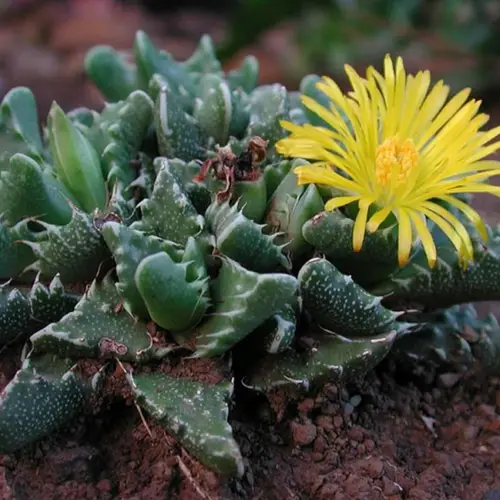
How to Grow Faucaria Tiger Jaws Succulents in Malaysia
Faucaria succulents, commonly known as “tiger jaws” for their distinctive toothed, jaw-like leaves, are fascinating rosette-forming plants that can thrive in Malaysia’s tropical climate with proper care. These compact succulents make excellent indoor houseplants and are perfect for urban gardeners looking to add unique foliage to their collection.
Growing Faucaria in Malaysia’s warm temperatures (24-32°C) and high humidity requires understanding their specific needs, particularly regarding watering and light exposure. This comprehensive guide will help you successfully cultivate these striking succulents in tropical conditions.
Faucaria Plant Profile
Classification: Foliage houseplant (Succulent)
Plant Group: Rosette-forming succulent
Distinctive Feature: Toothed, jaw-like leaves arranged in rosettes
Pet Safety: Not pet-safe; keep away from cats and dogs
Popular Varieties
- Faucaria tigrina – The most common variety, known as “Tiger Jaws” for its prominent tooth-like leaf margins
Essential Care Requirements for Faucaria
Temperature
Faucaria thrives in Malaysia’s average warm temperatures. They prefer consistent warmth and should be protected from temperature extremes. Indoor conditions between 24-32°C are ideal, making them well-suited to Malaysian homes and offices.
Light Requirements
Provide semi-shade with some direct sunlight. In Malaysia’s intense tropical sun, place your Faucaria where it receives bright indirect light with some gentle morning sun. Avoid harsh afternoon sunlight, which can cause sunburn. East-facing windows or shaded outdoor areas work well.
Watering Guide for Tropical Climates
Water thoroughly only when the planting medium begins to dry out. This is crucial in Malaysia’s high-humidity environment (often 80%+ humidity). Faucaria needs significantly less water than many other houseplants due to its succulent nature and our humid climate. Always check soil moisture before watering – when in doubt, wait another day or two.
Soil and Repotting
Use well-draining soil specifically formulated for cacti and succulents. Repot only when necessary (typically every 2-3 years) using:
- Serbajadi Cactus Soil – Specially formulated for optimal drainage and succulent health
Fertilizing Your Faucaria
Feed your tiger jaws succulent with specialized cactus fertilizer to promote healthy growth:
- Serbajadi Cactus & Succulent Growth Booster – Promotes vigorous growth and healthy foliage
- Serbajadi Cactus Growing Inducer – Encourages robust development
Common Problems and Solutions
Light-Related Issues
Discoloration or pale leaves: Insufficient light. Move to a brighter location with more indirect sunlight.
Suddenly growing tall and leggy: Not enough light causing etiolation (stretching). Increase light exposure gradually.
Browned or calloused flesh: Sunburn from too much direct sun. Move to a location with filtered light or morning sun only.
Watering Problems
Flesh begins to shrivel or pucker: Underwatering. Increase watering frequency slightly, but still allow soil to dry between waterings.
Leaves brown and dry or calloused: Chronic underwatering. Water more thoroughly when you do water.
Leaves mushy and falling apart: Overwatering – the most common problem in Malaysia’s humid climate. Reduce watering frequency immediately.
Root rot: Drainage issues and/or overwatering. Repot in fresh, well-draining cactus soil and reduce watering.
Browning or blackening leaves, stems, or base: Severe overwatering or root rot. Remove affected parts, repot in fresh soil, and adjust watering schedule.
Pest Management
Mealybugs
White, cottony insects that cluster on leaves and stems. Remove by wiping with a damp cloth or cotton bud, then spray with Serbajadi Extra Strength Neem Spray for effective organic control.
Spider Mites
Tiny pests that create fine webbing and cause stippling on leaves. These attack water-stressed plants, so maintaining proper watering (without overwatering) helps prevent infestations. If detected, wipe off with a damp cloth and treat with Serbajadi Extra Strength Neem Spray.
Scale Insects
Small, brown, shell-like pests that attach to leaves and stems. Remove manually with a damp cloth or cotton bud, then spray with Serbajadi Extra Strength Neem Spray.
Tips for Success in Malaysia’s Climate
- Humidity awareness: Malaysia’s high humidity means Faucaria needs less frequent watering than care guides from temperate regions suggest
- Monsoon season: During heavy rain periods, move outdoor plants under shelter and reduce watering frequency
- Air circulation: Ensure good air flow around your plants to prevent fungal issues in humid conditions
- Drainage is critical: Never let Faucaria sit in water – always use pots with drainage holes
- Morning sun is best: Gentle morning sunlight provides energy without the risk of afternoon sunburn
Frequently Asked Questions
How often should I water Faucaria succulents in Malaysia?
In Malaysia’s humid tropical climate (80%+ humidity), water your Faucaria only when the soil begins to dry out. This is typically less frequent than in drier climates. Overwatering is the most common cause of problems, leading to root rot and mushy leaves. Always check soil moisture before watering.
Why are my Faucaria leaves turning brown?
Brown leaves on Faucaria can indicate several issues: browned or calloused flesh suggests sunburn from too much direct light; brown and dry leaves indicate underwatering; mushy brown leaves that fall apart signal overwatering; browning at the base suggests root rot from drainage issues or overwatering.
Can Faucaria tiger jaws grow in Malaysia’s tropical climate?
Yes, Faucaria can thrive in Malaysia’s tropical climate (24-32°C) with proper care. The key is managing humidity and watering carefully. Provide bright indirect light, use well-draining cactus soil, and water less frequently than you would in drier climates due to Malaysia’s high humidity levels.
What pests commonly affect Faucaria succulents?
Common pests include mealybugs (white waxy bugs), spider mites (which attack water-stressed plants), and scale insects. Remove pests by wiping with a damp cloth or cotton bud, then spray with organic neem spray. Spider mites can be prevented by maintaining proper watering schedules without overwatering.
Why is my Faucaria growing tall and leggy?
Faucaria growing tall and stretching (etiolation) indicates insufficient light. Move your plant to a brighter location with more indirect sunlight and some direct morning sun. This rosette succulent needs adequate light to maintain its compact, attractive form.
Conclusion
Faucaria tiger jaws succulents make excellent additions to Malaysian homes and gardens when given proper care. By understanding their specific needs – particularly regarding watering in our humid climate and appropriate light exposure – you can enjoy these distinctive, jaw-like rosette plants for years to come. Remember: when it comes to watering Faucaria in Malaysia, less is often more!