Flowers have a job
A flower is part of a flowering plant's life cycle. Flowers help the plant produce seeds, from which new plants can grow.
Meet pollen
Pollen is made in the anthers of a flower. Pollination happens when pollen reaches a stigma, the part that receives it. This can happen within one flower or between flowers of the same kind.
Visitors at work
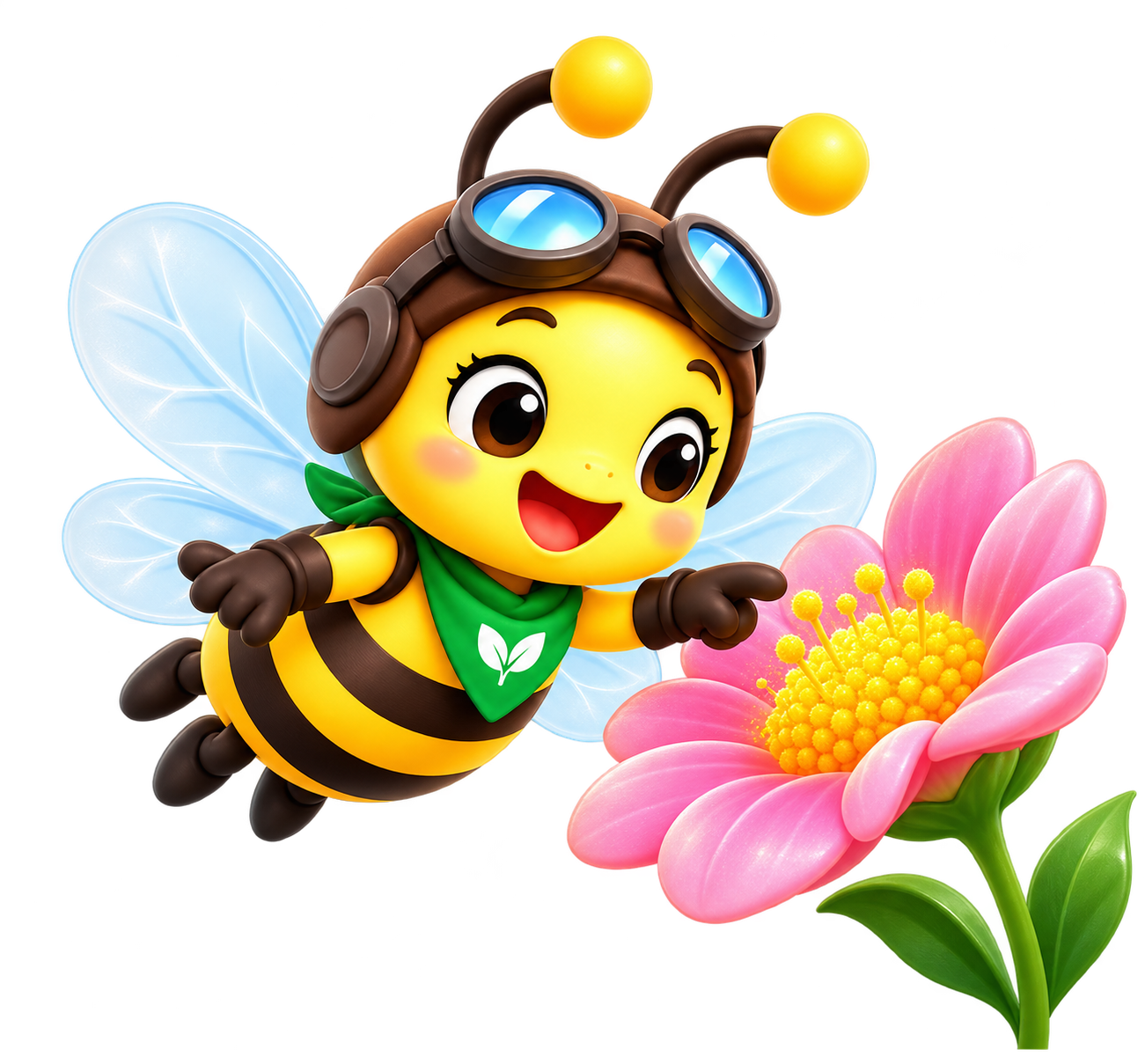
Many flowers offer nectar, a sweet liquid, or pollen as food. When a bee or another pollinator visits, some pollen can stick to its body. It may leave that pollen on a stigma as it moves between flowers.
From flower to seed
Pollination and fertilisation are different steps. After suitable pollen reaches a stigma, fertilisation can happen inside the flower. Seeds can then develop, and the flower's ovary can grow into a fruit around them.
Not every flower needs a bee
Some plants use wind to move pollen. Different flowers have different ways of being pollinated, so a flower without an insect visitor is not necessarily missing a helper.
Try it: watch a flower
With a grown-up, choose a safe spot beside a flowering plant and watch quietly for five minutes. Stay far enough away that you do not disturb its visitors. Draw the flower and record which visitors you see. Can you spot where one visitor goes next? Seeing a visit does not prove that pollination happened. If no visitors appear, record that too.
For grown-ups
Observe only: do not catch insects, touch nests, taste plants or handle unfamiliar flowers. Choose a comfortable distance and follow any allergy precautions. Paper and pencils are all you need.